
Low MOQ Clothing Manufacturing: How to Test a New Style Without Locking Up Your Cash
The first question most wholesalers ask a new supplier is not about price. It is: how few pieces can I take? That is not a negotiating tactic. It is a cash-flow question, and it usually decides whether the relationship starts at all.
One new style in six colours and five sizes is thirty SKUs. At a 1,000-piece minimum per colour, that single style ties up 30,000 units before anything sells. At 200 pieces, the same test costs a fifth of the cash and still answers the question you actually care about: whether the fit, the fabric and the price point work in your market.
What a Minimum Order Actually Costs You
Do the arithmetic before you compare suppliers. A twelve-style capsule range at 800 pieces per style is 9,600 units. At an average FOB of $9 that is roughly $86,000 committed, plus freight, duty and warehousing, months before the first reorder arrives.
At 200 pieces per style the same range is 2,400 units and about $21,600. You are not buying 2,400 shirts. You are buying twelve pieces of market information at a price you can survive being wrong about.
Why Factories Set the Number Where They Do
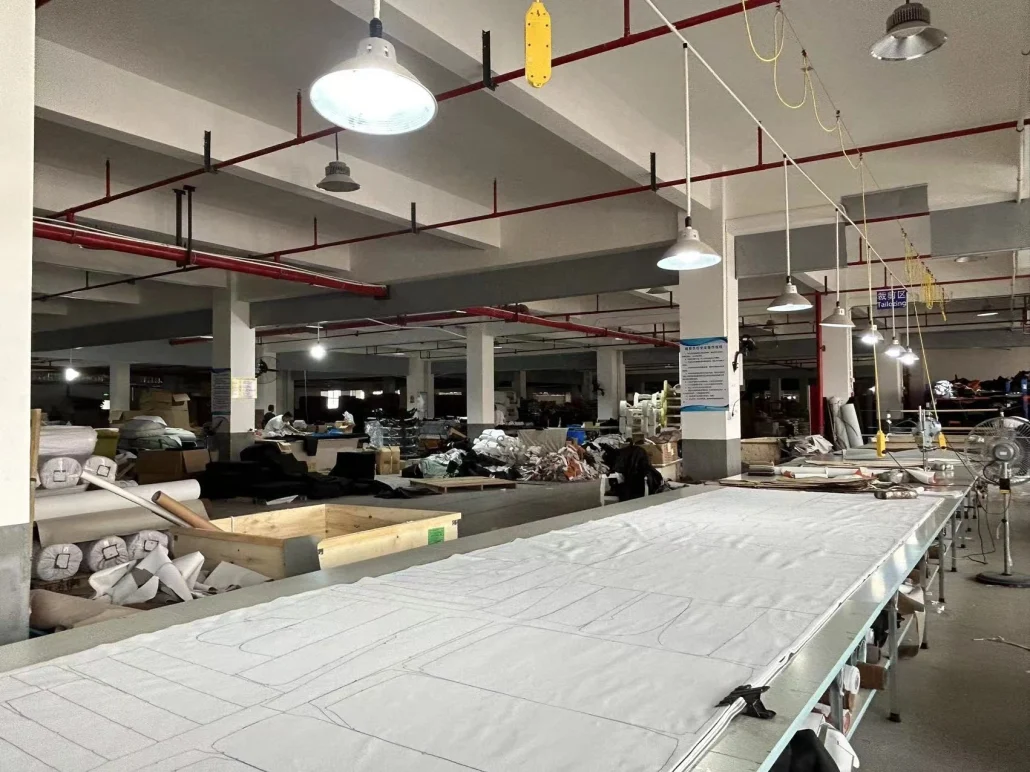
Minimums are not arbitrary. Fabric is dyed in lots, and a mill will not open a dye bath for forty metres of one shade. Cutting rooms lose efficiency when a marker has to be laid for a small quantity. Sampling, pattern making and line setup cost almost the same whether the run is 200 or 2,000 pieces.
This is why arguing the number down rarely works, while changing the structure of the order often does. Four colours at 200 pieces each is a harder order to place than two colours at 400. If you need range rather than depth, cut colourways first and hold the quantity.
How to Structure a Trial Both Sides Can Live With
A trial order has three jobs: prove the fit sells, prove the fabric holds up, and prove the supplier can execute. Keep it small, but do not make it so thin that it proves nothing.
- Limit colourways, not sizes. Two colours in a full size run tells you more than six colours in two sizes.
- Use a fabric the mill already stocks wherever you can. Running shade or stock greige removes the dye-lot minimum from the equation.
- Pay for sampling separately, and ask for the fee to be credited against the bulk order. A supplier who refuses credit is telling you something.
- Test the style most likely to sell, not the most adventurous one. A trial validates execution; it is not a place to gamble.
- Write down what the 200 pieces include: your main label, hangtag, polybag, carton marks. These are often quoted as extras afterwards.
What to Check Before You Accept a Low MOQ Offer
A low number is only useful if the rest of the offer supports it. Ask for the minimum in writing per style, per colour and per size, because suppliers count these three differently and the difference can double your order.
Watch for the factory that quotes 100 pieces, needs forty-five days, and cannot show a graded size chart. A cheap trial that produces an ungraded garment teaches you nothing about whether the style will sell in your market.
Ask what the reorder minimum is. The first order is a test; the second order is the business. If reorder minimums jump to 1,000 pieces, the low entry price was a door, not a policy.
FAQ
What counts as a realistic low MOQ for custom menswear?
For a style in running or stock fabric, 200 to 300 pieces per style is a workable entry point in most menswear categories. Below that, expect either a stock fabric, a simpler construction, or a sampling fee that carries the setup cost.
Is a small order more expensive per unit?
Yes, typically 10 to 20 percent above bulk pricing, because dye lots, cutting setup and line changeover are spread over fewer pieces. Treat the difference as the cost of information rather than a markup.
Can I mix sizes and colours inside one minimum?
Usually within a style, yes, but ask how the supplier counts it. Some count per colour, some per style, and that difference can double the order you thought you placed.
How long does a 200-piece trial take?
Not much less than a bulk order. Fabric lead time, sampling and line scheduling dominate the calendar, so expect most of the same days with a shorter sewing window.